


Geography
Intent:
At our school, we believe that geography helps children make sense of the world around them and understand their place within it. Through an ambitious, knowledge-rich curriculum, pupils develop curiosity about the Earth's diverse people, places, environments and natural processes.
Our geography curriculum is carefully sequenced to build knowledge and skills progressively throughout Key Stage Two. We have deliberately chosen our study locations to take pupils on a journey from the familiar to the wider world, deepening their geographical understanding while enabling meaningful comparisons between places.
Pupils begin in Year 3 by studying the United Kingdom, developing an understanding of the human and physical features of their own country. In Year 4, they broaden their perspective by exploring Europe, comparing countries, landscapes, climates and cultures. In Year 5, pupils study North America, investigating larger-scale geographical features, environments and human impacts on the continent. Finally, in Year 6, pupils apply and extend their knowledge through the study of South America, exploring diverse landscapes, cultures and environmental issues.
Through the study of these regions, we hope pupils are able to make meaningful comparisons between places and develop a deeper understanding of the connections between people, environments and the wider world.
Implementation:
Our geography curriculum is delivered through a consistent lesson structure that supports knowledge retention and the development of geographical understanding over time.
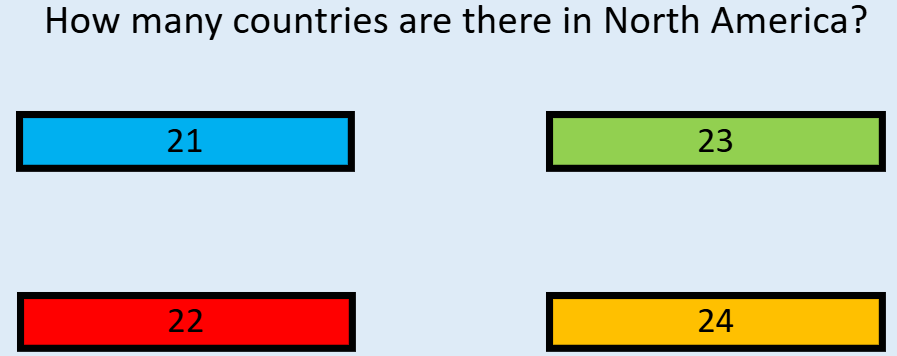
Each lesson begins with a 'Sticky Quiz', which revisits learning from previous lessons, units and year groups. These retrieval activities help pupils strengthen recall and make connections between new and existing knowledge.
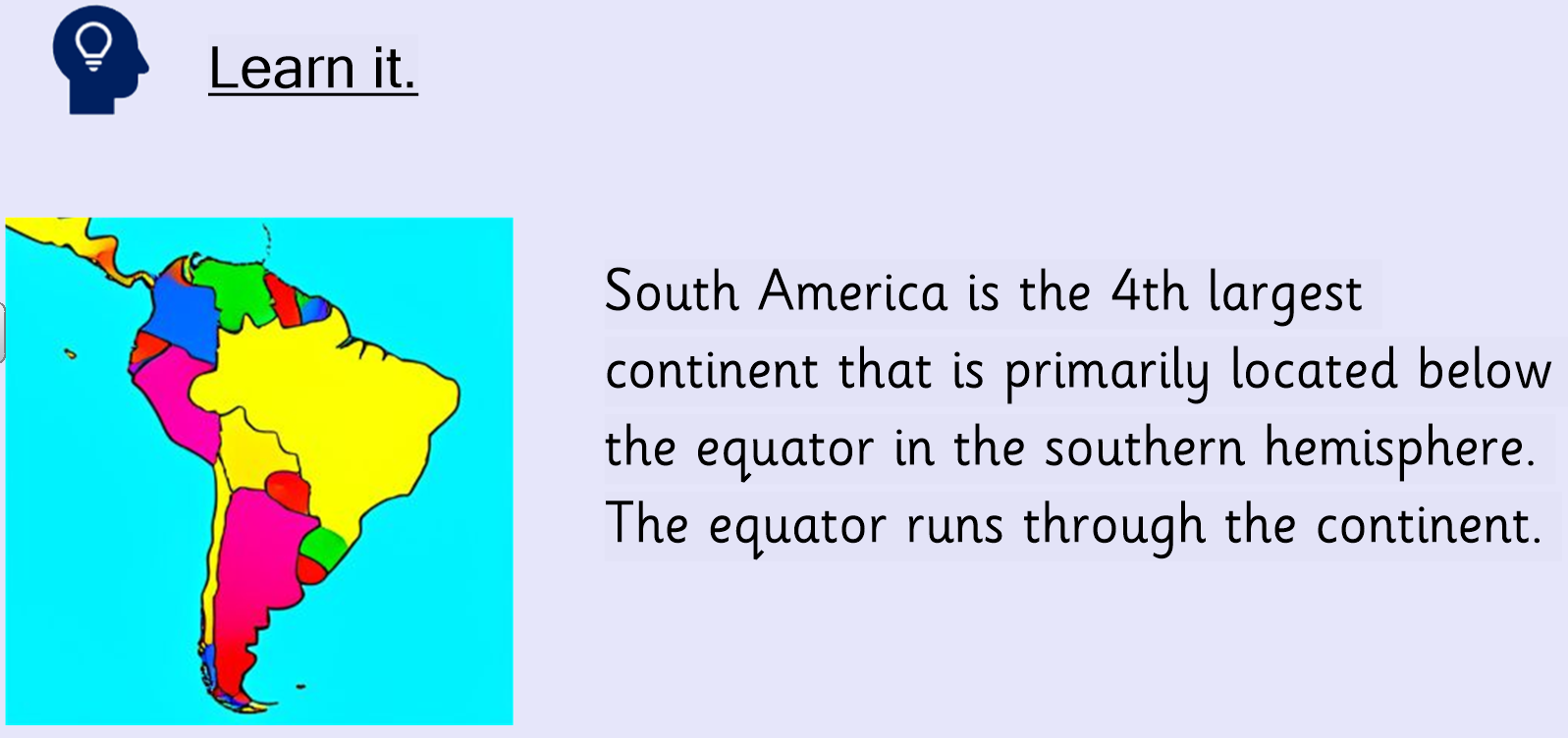
Pupils then move into the 'Learn It' phase, where new geographical knowledge, vocabulary and concepts are explicitly taught through the use of maps, atlases, digital technologies, photographs and other geographical sources.
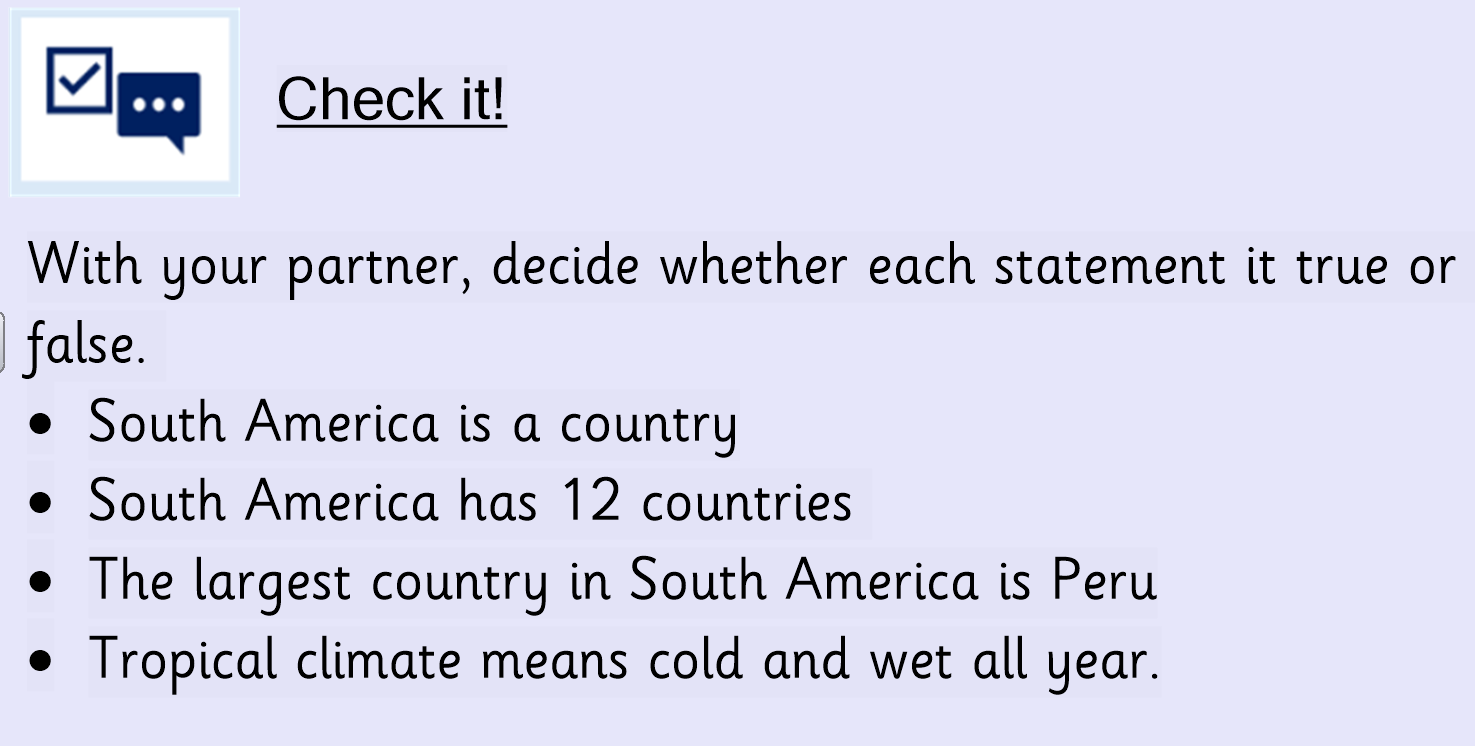
Following this, pupils complete a 'Check It' task, allowing teachers to check understanding and address any misconceptions before learning moves on.
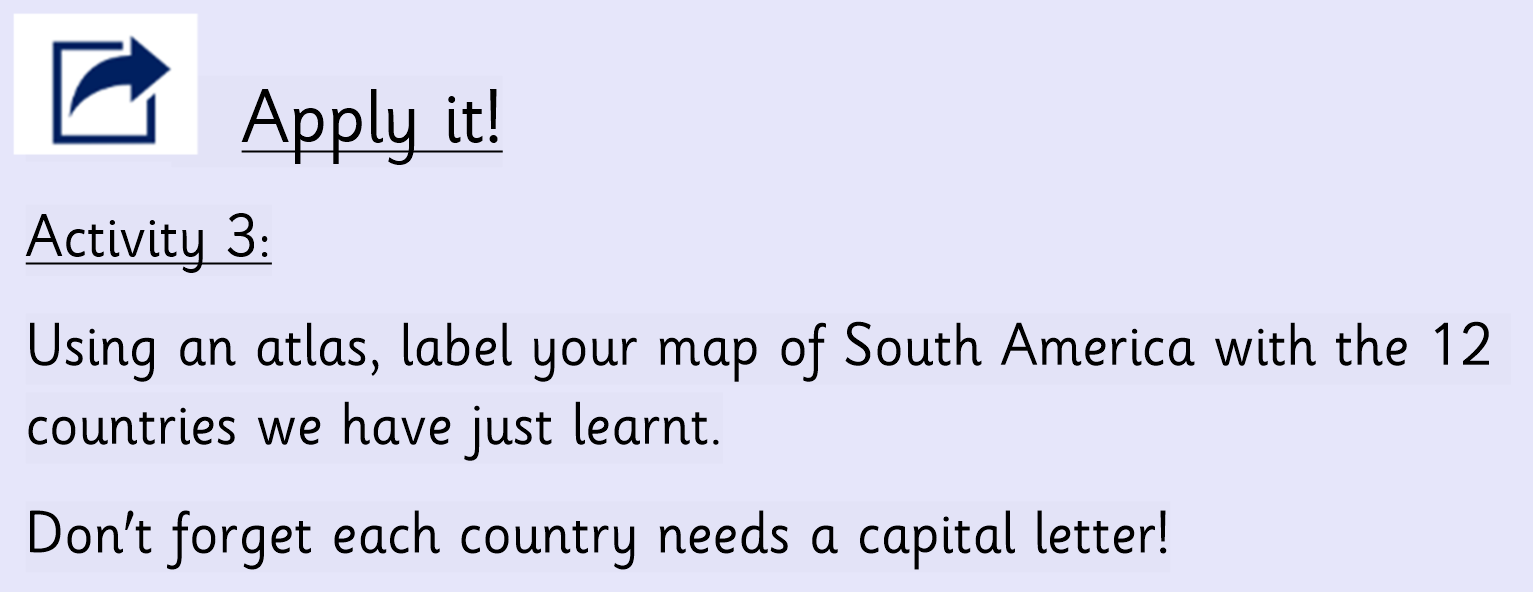
Pupils then 'Apply It' by taking part in activities such as map work, fieldwork, data interpretation, geographical enquiries and discussions, enabling them to deepen their understanding and use their knowledge in different contexts.
Finally, pupils 'Review It' by reflecting on their learning verbally. This helps them consolidate key knowledge, use geographical vocabulary accurately and make links to previous and future learning.
This approach ensures pupils build secure geographical knowledge over time, make meaningful curriculum connections and develop as confident geographers.